

Blingz
Apperfun
I approached Blingz as an entertainment app with one practical question in mind: does the promise of playing and earning feel clear enough to justify giving it space on my phone? My first impression was that it aims for a simple, low-commitment experience rather than trying to replace a full game, a serious rewards service, or a traditional streaming app. That distinction matters, because the appeal is less about deep gameplay and more about whether small moments of activity feel worthwhile.
The app is free, rated for Everyone, and developed by Apperfun. It has reached over one hundred thousand installs, with an average rating of 4.6 from around seven thousand ratings and about one thousand reviews. Those figures suggest that many people have found the basic idea appealing, but they do not answer the questions I care about most: what does the app actually ask from me, how much control do I have, and how carefully should I treat the earning promise?
My overall experience is best described as cautiously positive. Blingz can suit someone who enjoys casual entertainment and is willing to treat rewards as a bonus rather than income. I would not recommend approaching it with the expectation of dependable earnings. The difference between those two mindsets affects almost every decision, from how much time to spend inside the app to how carefully to review each permission or account prompt.
What using Blingz feels like in everyday life
The most natural way to use Blingz is in short gaps during the day. I can imagine opening it while waiting for a bus, taking a break between tasks, or relaxing for a few minutes before bed. In that role, it competes with casual games, short-form entertainment, and reward-focused apps that ask users to complete small activities. Its strongest advantage is the possibility that ordinary play may lead to something of value, while its biggest weakness is that the reward element can make a simple pastime feel more transactional than relaxing.
I would not install it as a replacement for a favorite game. Someone looking for a rich story, competitive depth, long-term progression, or carefully balanced mechanics will probably find the experience too lightweight. Blingz makes more sense for a user who wants an easy diversion and is comfortable checking the practical details around rewards before investing much time.
Related News

Why WhatsApp Messenger Still Makes Everyday Communication Feel Easy

Jurassic World: The Game Is the Better Dino Tycoon for Strategic Players

Threads in Real Life: Who Should Join, Lurk, or Leave

How SHEIN Turned Shopping Into an Endless Content Feed

How to Make Fortnite Feel Smarter on Mobile

Should You Switch to Microsoft Outlook on Mobile?
The store summary presents the concept in very few words: play and earn. That simplicity is useful, but it also creates a responsibility for the user. “Earn” can mean very different things depending on eligibility, redemption rules, activity requirements, account status, and available choices. I therefore treated every reward-related screen as something to read rather than something to accept automatically.
Why the trust question matters more here
With an ordinary offline puzzle, the main concern may be whether the controls are enjoyable. With an app built around rewards, trust becomes part of the product experience. I want to understand why an account is needed, what information is requested, which choices are optional, and what happens before I spend meaningful time completing activities. A polished interface alone is not enough.
My advice is to begin slowly. Install the current version, which is 1.63.1, and look through the first screens without rushing toward the most attractive-looking reward. Check the wording around sign-in, notifications, offers, and redemption. If a prompt is unclear, I would rather pause than tap through it simply because the app is free.
Gallery
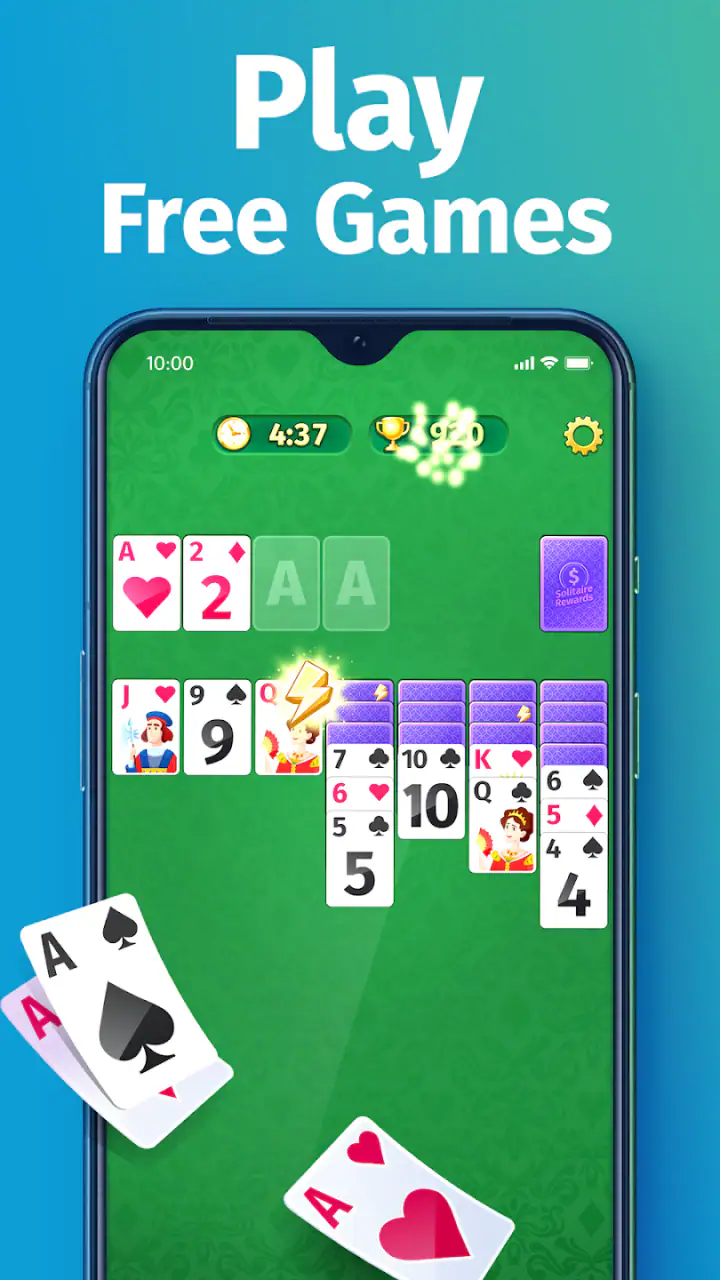
The minimum operating-system requirement is Android 8.0, making the app accessible to many older Android phones. That is convenient for people who do not use a recent device, although compatibility should not be confused with identical performance. Older hardware may handle simple screens comfortably but struggle if an activity loads heavy advertising or demanding interactive content.
What I would check before committing time
My first check would be whether the app explains the reward path in plain language. I want to know what action produces progress, whether progress is tracked visibly, and whether a threshold must be reached before a choice becomes available. A good rewards experience should help me understand the relationship between effort and outcome without making me decode vague labels.
My second check would be the account area. I would look for a way to review connected details, change basic preferences, and understand how to stop using the service. Even when an app is entertaining, account controls are important because reward-based services may encourage users to keep returning. The ability to leave should feel as straightforward as the ability to join.
My third check would be the permission prompts. I would grant only what is clearly needed for a feature I intend to use. If a permission appears before I understand its purpose, I would decline it initially and see whether the app still works. This is not an accusation against Apperfun; it is simply a sensible habit for any app that combines entertainment with user accounts or reward activity.
Data-sensitive moments deserve extra attention
The most sensitive point is usually not the first casual play session. It is the moment when the app asks for information connected with an account, identity, payment, or reward delivery. That is when I would slow down and read every field. I would avoid entering information that is not clearly required for the option I have chosen, and I would not assume that a reward screen should automatically receive every detail it requests.
I would also be careful with external offers or activities that move me away from the core app. Reward ecosystems sometimes involve several steps, and the user may not immediately know which company is responsible for a particular request. My rule is simple: before proceeding, I check who is asking, what I am agreeing to, and whether I can return to Blingz without losing track of the process.
Notifications are another small but meaningful choice. They can remind me to return, but too many reminders can turn a casual app into a source of pressure. I would keep notifications off unless they provide a clear benefit. If the app allows different notification categories, selecting only the useful ones would be better than allowing everything by default.
I would apply the same caution to advertising. Ads may be part of how a free entertainment app supports itself, but I do not consider an advertisement an instruction. I would close anything that looks misleading, avoid tapping rapidly through unfamiliar screens, and never install another app merely because a reward message creates urgency.
How much control does the user really have?
User agency is not only about a settings menu. It is also about whether the app gives me enough information to make a sensible decision before I spend time. I look for visible progress, understandable conditions, and clear choices. If those elements are easy to find, I can decide whether an activity is worth doing. If they are hidden behind several screens, the experience becomes less comfortable even when the underlying entertainment is pleasant.
For a first session, I would use a small personal test. I would play briefly, note what the app says I have earned or completed, and then check whether that information remains visible after leaving and returning. This helps distinguish a clear progress system from a series of temporary promotional messages. It also prevents me from spending an evening chasing a target I never properly understood.
I would keep expectations modest until I had personally seen how the reward process works from beginning to end. A displayed balance is not the same as a completed redemption, and a task marked as available is not necessarily the same as one that fits my location, device, or account. That does not make the app untrustworthy; it means the user should judge the complete workflow rather than one attractive number on a screen.
A realistic use case: the five-minute break
Imagine I have five minutes before an appointment. I open Blingz, choose a short activity, and finish it without needing to plan a long session. In the best case, I get a little entertainment and see clear progress toward a reward. When the appointment begins, I close the app knowing exactly where I stand. That is the kind of use for which I think the app has the most sense.
Now imagine a different situation: I am tired, I see several prompts, and I begin opening activities simply because each one suggests another opportunity. The experience can quickly become less enjoyable. Time spent switching between screens, watching advertisements, or checking conditions may outweigh the entertainment. My practical tip is to set a stopping point before starting. For example, I might decide to use the app only during one short break and stop regardless of whether the next offer looks tempting.
This small boundary is more important than it sounds. Reward apps can make users focus on the next milestone instead of the value of the time already spent. Treating Blingz as a casual extra keeps the decision in my hands. Treating it as a money-making routine could lead to disappointment.
Where it differs from ordinary entertainment apps
Compared with a standard casual game, Blingz adds a practical incentive. That can make repetitive activity feel more purposeful, especially for someone who enjoys collecting progress. The trade-off is that the experience may be less pure. A normal game can be judged mainly on fun, while this app also has to be judged on clarity, effort, and the usefulness of its reward path.
Compared with a conventional rewards app, the entertainment angle is more central. I would choose Blingz when I want an activity that feels lighter than filling out forms or completing purely commercial tasks. I would choose a more specialized rewards service when I need predictable terms, detailed tracking, or a reward workflow designed primarily around transactions rather than play.
Compared with short-form video, Blingz may offer a stronger sense of progress, but it may not provide the same effortless stream of content. Compared with a paid game, it removes the purchase barrier but may introduce more interruptions or conditions. None of these comparisons makes one option universally better. The right choice depends on whether I value entertainment, certainty, depth, or convenience most.
Who should try it, and who should skip it
I think Blingz is a reasonable fit for adults and younger users whose families are comfortable with the app’s age rating and account choices, provided they understand that free does not mean effortless. It may also suit people who like trying new casual activities and are happy to stop when the experience no longer feels worthwhile. The Everyone rating makes it broadly approachable, but parents should still encourage children to ask before entering personal details or following an external offer.
I would recommend it most to users who can keep rewards in perspective. If a small bonus makes casual play more enjoyable, the app could be a pleasant addition. If you need reliable income, guaranteed value, or a precise hourly return, I would skip it and look for a service whose purpose and terms are built around that need.
I would also skip it if I dislike ads, notifications, account prompts, or any form of activity tracking connected with rewards. Even a well-designed app may feel uncomfortable when its central idea depends on returning regularly. Someone who wants a quiet, uninterrupted game would probably be happier with a paid title or an offline app.
Practical habits that improve the experience
- Read before tapping: I check the wording of every reward, permission, and account prompt instead of assuming the next button is harmless.
- Use a time limit: A short session keeps the app entertaining and makes it easier to judge whether the result justifies the effort.
- Separate progress from promises: I treat visible points or milestones as progress inside the app, not as guaranteed value outside it.
- Review choices periodically: I revisit notifications, connected accounts, and permissions so that old decisions do not remain active simply through habit.
- Protect sensitive details: I provide information only when I understand why it is needed and who will receive it.
One useful habit is to take a screenshot or note of important conditions before starting a longer activity, where the app makes those conditions visible. I would not do this to create unnecessary paperwork; I would do it because memory is unreliable when several offers look similar. If the result later seems different from what I understood, I have a clearer record of my own starting point.
Another useful habit is to test the exit path early. I would look for sign-out, account management, notification controls, and permission settings before I become invested. This is a simple way to confirm that I can manage the relationship with the app rather than letting the app dictate my routine.
My cautious verdict on Blingz
Blingz is an interesting entertainment app because it asks the user to balance two kinds of value: the enjoyment of casual play and the possibility of earning something along the way. In my view, it works best when the first value remains sufficient on its own. If I would not enjoy the activity without the reward, I should be careful about spending too much time chasing it.
The app’s free price and broad age rating make trying it easy, while its rating of 4.6 and more than one hundred thousand installs show that it has attracted a meaningful audience. Apperfun has positioned it as a straightforward play-and-earn experience, but the user still needs to examine the details personally, especially around accounts, permissions, notifications, external activities, and redemption choices.
My recommendation is therefore conditional but genuine: try it if you want a casual diversion and can treat rewards as an optional extra. Start with a short session, review the controls, and decide whether the progress feels clear rather than merely exciting. The safest way to enjoy Blingz is to keep your time, personal information, and expectations under your own control.
If you want deep gameplay, quiet offline entertainment, or dependable financial returns, another category of app will suit you better. If you want a free way to explore brief activities while keeping an eye on possible rewards, Blingz is worth a careful look. I would use it selectively, keep notifications and permissions intentional, and never let the promise of earning replace ordinary common sense.
FAQs for Blingz
What is Blingz and what can I do with it?
Blingz is a social entertainment app focused on connecting users through interactive content, communication, and community-style features. Depending on the version available in your region, you may be able to create a profile, discover other users, share content, participate in activities, and interact through messages or reactions. The exact tools can vary by platform and update, so checking the current app listing is recommended before downloading.
Is Blingz free to download and use?
Blingz can generally be downloaded without an upfront charge, but some features may require in-app purchases, subscriptions, virtual items, or other paid options. Free access may be enough for basic browsing and interaction, while premium functions could improve customization or participation. Before confirming a purchase, review the pricing, renewal terms, and payment details shown in the Google Play Store or Apple App Store.
Does Blingz require an account or personal information?
You may need to create an account to use Blingz beyond its initial screens. Registration can involve information such as an email address, phone number, username, date of birth, profile photo, or login through a supported third-party service. Because this is a social-style application, review its privacy policy and permission requests carefully, and avoid sharing sensitive personal information publicly.
Is Blingz safe for children and teenagers?
Parents should check Blingz’s official age rating, community guidelines, and privacy documentation before allowing a child or teenager to use it. Social apps can include communication with strangers, user-generated content, advertising, and purchases. If younger users access the app, enable device-level parental controls, discuss safe online behavior, and monitor privacy settings, contacts, and any messaging or live-interaction features.
What should I check before downloading Blingz?
Before installing Blingz, confirm that your Android or iOS device meets the required operating-system version and has enough storage space. Also verify that you are downloading the official version from Google Play or the App Store, rather than an unknown website. Read recent reviews, inspect requested permissions, check whether the app works in your country, and understand its purchase, account-deletion, and data-handling policies.
Pros
- Simple interface makes the app easy to navigate for new users.
- Lightweight design should work smoothly on many modern Android and iOS devices.
- Quick access to core features reduces the time needed to get started.
- Regular use can make routine interactions feel more engaging and rewarding.
- The app offers a convenient mobile experience without requiring a desktop computer.
Cons
- Some features may depend on a stable internet connection to work properly.
- The value of available rewards or benefits may vary by region and user activity.
- Frequent notifications could become distracting if alert settings are not adjusted.
- Limited information about privacy practices may concern users who value transparency.
- Performance and feature availability can differ between Android and iOS versions.


